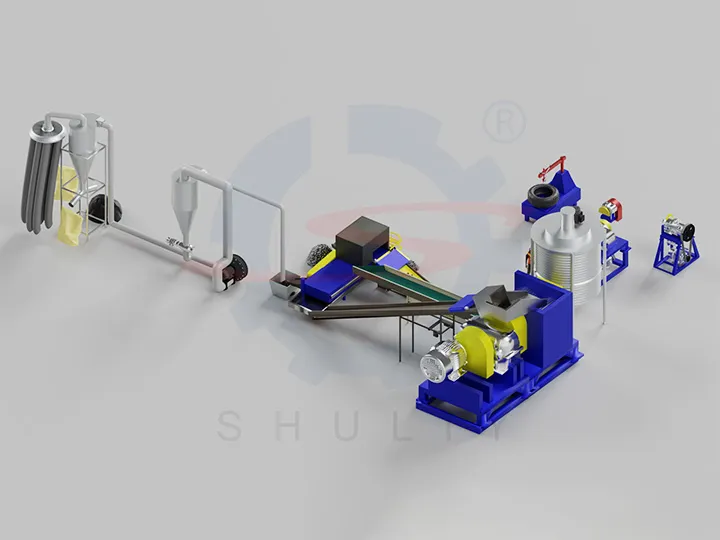
Our semi-automatic tire recycling plant is designed to process waste tires of various sizes into high-quality rubber powder, clean steel wire, and optional nylon fiber.
This versatile tire recycling machine line includes a ring cutter, strip cutter, block cutter, bead wire remover, rubber powder mill, and an optional fiber separator.
The process is engineered for maximum efficiency, reduced wear on key components, and optimized end-product purity, making it an ideal investment for recycling businesses worldwide.
Rubber powder production process
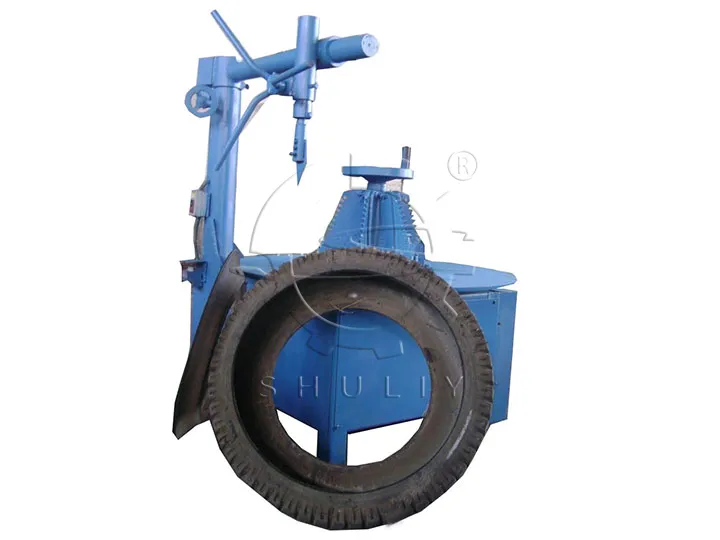
The process begins with the tire recycling machine cutting the sidewalls to remove the steel bead rings. The tire body is then sliced into strips and blocks, which are easier to handle and feed into the next stage. The bead wire remover extracts the remaining steel wire, protecting the grinding equipment.
In the rubber powder production line, the rubber blocks are ground into fine powder (20–120 mesh), with magnetic separation ensuring the removal of any remaining metal. For nylon-reinforced tires, the optional fiber separator increases the rubber powder purity to 99%.
Tire recycling machines for the tire pretreatment
The tire bead cutter is the first step in the tire recycling process, designed to break the tire sidewall.
After bead removal, the tire strip cutter slices the remaining tire body into uniform strips. These strips are the right size for feeding into the block cutter
The tire block cutter reduces the tire strips into smaller, manageable blocks, making them suitable for feeding into the rubber shredders .
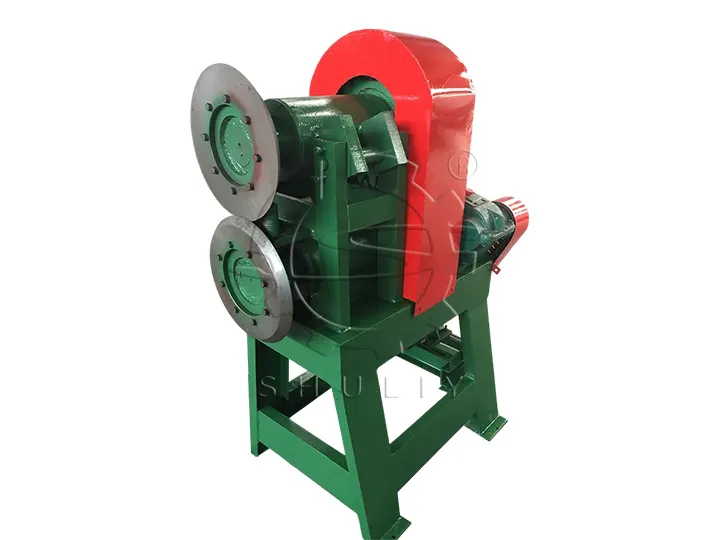
Key Equipment of the line: Rubber Grinding Machine
The core function of this tire grinder in the recycling line is to grind pre-processed rubber blocks into fine, high-value rubber powder.
Specifically, its function can be broken down into the following points:
- The tyre crusher machine processes rubber blocks that have already undergone pre-treatment (debeading, stripping, cutting) and have had the main steel bead wire removed.
- Using two high-speed, counter-rotating alloy rollers with special grooves, it subjects the incoming rubber blocks to intense squeezing, shearing, and grinding.
- Ultimately, it physically grinds these rubber blocks into rubber powder or granules, a raw material ready to be used in the manufacturing of new products like running tracks, floor tiles, and waterproofing membranes.
Highlight of Shuliy semi-automatic tire recycling plant
Our tire recycling plant is designed to balance efficiency, cost, and environmental performance:
- Flexible configuration – Machines can be customized for small-scale, medium-scale, or industrial production.
- High productivity – Even the smallest model can process up to 8000 kg of material per hour.
- Durability – Equipped with wear-resistant alloy blades and heavy-duty construction for long service life.
- Energy efficiency – Optimized motor systems reduce power consumption during the grinding process.
Turn Scrap Tires into Valuable Resources: Applications & Opportunities
Investing in our equipment opens up a diverse market for converting scrap tires into in-demand products. Here is the value you can create:
- High-Value Rubber Powder & Granules: This is your premium product, used to manufacture colorful running tracks, safe playground tiles, high-quality reclaimed rubber, and durable waterproofing membranes.
- High-Calorific Tire Derived Fuel (TDF): The shredded tire chunks are a clean, high-energy alternative fuel sought after by cement kilns, power plants, and industrial boilers.
- Direct Revenue from Scrap Steel: The separated and baled steel wire is a high-quality raw material for steel mills, ready for immediate sale and cash flow.
Applications of Rubber Powder
Rubber powder produced by our rubber powder production line is a high-value, versatile material with wide-ranging applications across multiple industries.
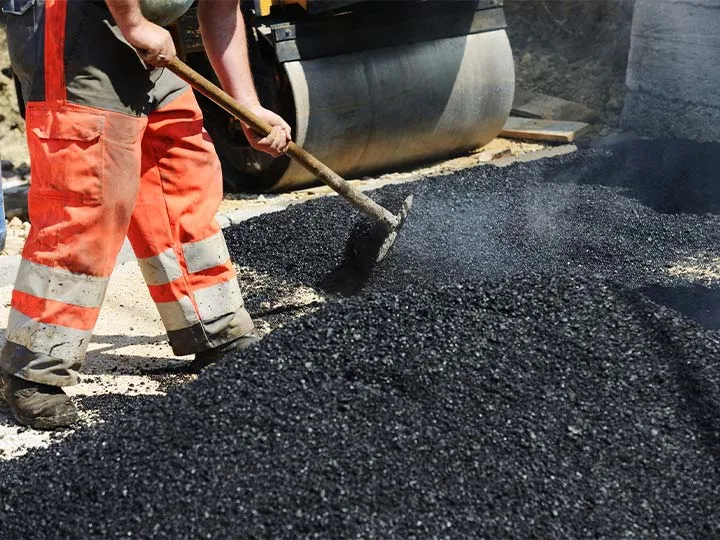
In the sports and leisure industry, fine rubber powder is widely used to create running track surfaces, playground flooring, and sports field infill, offering excellent shock absorption, slip resistance, and durability. In the construction sector, it is an essential additive for modified asphalt.
For the manufacturing industry, rubber powder can be processed into rubber mats, floor tiles, and molded products for both industrial and household use. It also plays a role in producing reclaimed rubber, which can be reintroduced into tire manufacturing or other rubber goods.
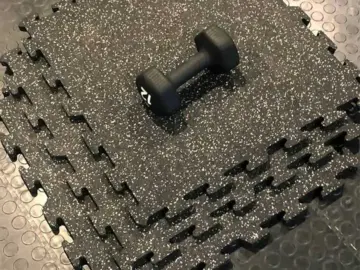
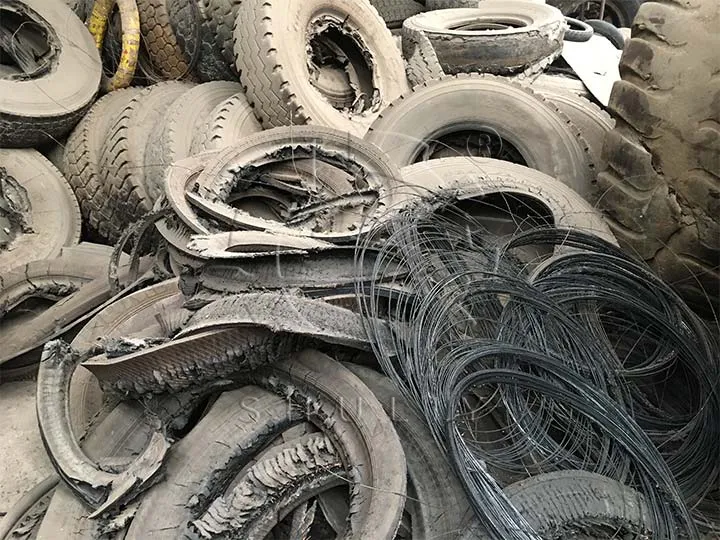
Additionally, the steel wire extracted during the recycling process can be sold to metal recyclers, while optional nylon fiber recovery provides another revenue stream for textile or reinforcement applications.
FAQ of Shuliy semi-automatic tire recycling plant
How many operators are required for this “semi-automatic” line, and what are their primary responsibilities?
A complete semi-automatic line typically requires 3 to 5 operators, depending on the scale and layout. Their primary responsibilities are divided by workstation:
- Station 1 (Pre-processing): Operates the Debeader (Tire Circle Cutter), Strip Cutter, and Block Cutter to break down whole tires into smaller chunks.
- Station 2 (Material Handling & Feeding): Manually transports the tire blocks to the Bead Wire Separator and then feeds the separated rubber blocks into the hopper of the Rubber Grinder (Powder Mill). This is the most labor-intensive part of the process.
- Station 3 (Monitoring & Packing): Monitors the operation of the Rubber Grinder, Sieve/Screener, and Fiber Separator, and is responsible for packing the final products (rubber powder, steel wire, nylon fiber) for storage.
Can you describe in detail how materials are transferred between the individual tire recycling machines? Are there any obvious process bottlenecks?
Material flow relies entirely on manual labor. The process is as follows:
Whole Tire → [Debeader] → [Strip Cutter] → [Block Cutter] → Manual Transport → [Bead Wire Separator] → Manual Transport → [Rubber Grinder] → Pneumatic/Screw Conveyor → [Screener/Fiber Separator] → Final Products.
Yes, there is a clear process bottleneck. The final output of the entire rubber powder production line is largely determined by the speed and consistency of the manual transport and feeding, rather than the maximum theoretical capacity of any single recycling machine.
For a startup, can we purchase the tire recycling equipment for this line in phases, for instance, starting with just the pre-processing machines and the rubber grinder?
Absolutely. This is one of the biggest advantages of a semi-automatic rubber powder production line. Since each machine is a standalone unit, you can invest in phases based on your initial capital and business volume. A common startup configuration is to first purchase the five core machines: Debeader, Strip Cutter, Block Cutter, Bead Wire Separator, and Rubber Grinder. Once production is stable and cash flow improves, you can then add the screening and fiber separation equipment for finer processing.
Why does this rubber granule production line use the “Debead-Strip-Block” combination instead of a single tire shredder? What are the differences in efficiency and cost between these two approaches?
- Cost: The initial investment for the “Debead-Strip-Block” combination is significantly lower than that of a high-power tire shredder with equivalent output. This is the primary appeal of the semi-automatic rubber granule production line.
- Efficiency & Automation: A tyre shredder offers higher processing efficiency and is easily integrated into a fully automatic rubber granules making line. The cutting combination, however, requires more manual intervention and multiple steps, making it more suitable for operations with lower daily throughput requirements.
- Conclusion: If your initial budget is limited and you do not require a high degree of automation, the cutting combination is an extremely cost-effective choice. If your goal is large-scale, high-efficiency production, you should consider an automatic line centered around a tire shredder.
The rubber grinder is the heart of the tire recycling plant. What specific technical advantages does your grinder (powder mill) have to ensure its durability and output quality?
- Grinder Rollers: Shuliy group use 5Cr6MnMo special alloy steel, which is extremely durable and wear-resistant, offering a much longer service life than common cast iron/steel rollers. Both rollers are grooved for enhanced grinding capability, and their 1:2.5 speed ratio creates greater friction for higher throughput.
- Bearings: It is equipped with eight double-row roller bearings, which drastically reduce friction and heat. This not only saves up to 1/3 in energy consumption compared to traditional equipment but also significantly extends the machine’s lifespan.
- Reducer: Shuliy machinery use a hypoid gear reducer, known for its high load capacity, low noise, and long service life, providing stable and powerful torque to the rollers.
How much factory space is required for the entire semi-automatic tire recycling line? Can the layout be adjusted to fit the shape of my workshop?
For a standard semi-automatic tire recycling line, considering the equipment footprint, material storage areas, and operational space, we recommend a workshop of at least 300-500 square meters (approx. 3,200-5,400 sq. ft.).
Because the machines are individual units, the layout is very flexible. It can be configured in a “U-shape,” “S-shape,” or other non-linear arrangements to fit the specific shape of your facility (e.g., long and narrow, L-shaped), which is another advantage over a fixed, fully automatic line.
For a rubber powder production line composed of multiple machines, what kind of installation and operator training support do you provide?
Shuliy Group provides comprehensive support. With your purchase, you will receive detailed installation manuals, operation guides, and electrical diagrams for each machine. We will guide your team through the installation, wiring, and initial commissioning via video calls. Since the semi-auto tire recycling equipment is modular, installation is less complex than a fully automatic line. We will also conduct online training for your operators to ensure they master the operational procedures and safety protocols for each machine.
If we place an order of your tyre recycling machine now, what is the delivery lead time? Do you handle international shipping and provide installation guidance?
The tyre recycling machine lead time for standard models is typically 30-45 days, depending on the current production schedule. We offer comprehensive global logistics services and can arrange shipping under various trade terms (FOB, CIF, etc.) as you require. We provide detailed installation manuals, electrical diagrams, and remote video guidance. If needed, we can also dispatch an experienced engineer to your site for installation, commissioning, and operator training (this is a paid service).
From a business perspective, what is the approximate payback period for this semi-automatic rubber powder production line? Can you assist us with this calculation?
The payback period depends on your local costs for raw tires, electricity, and labor, as well as the selling prices for your final products (rubber powder and steel wire). Based on the experience of most of our clients, the payback period is often shorter than that of a fully automatic powder poduction line due to its lower initial investment and the dual income from both rubber powder and steel. We would be happy to provide you with a free, detailed, and customized Return on Investment (ROI) analysis report based on your local market data to help you make an informed decision.