Every year, billions of scrap tires create a daunting “black pollution” challenge, burdening our planet. Yet, within this challenge lies a lucrative “black gold” opportunity.
At Shuliy, we are expert tire recycling machine manufacturers specializing in transforming this environmental problem into your profitable venture.
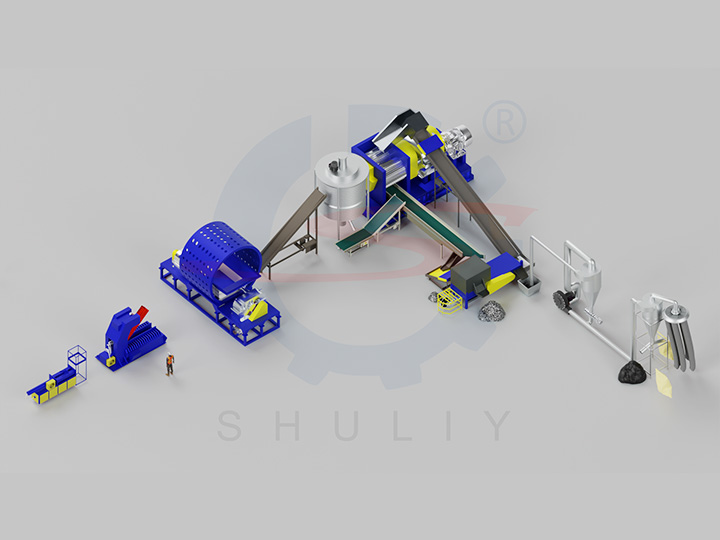
Our advanced fully automatic tire recycling line efficiently and reliably converts waste tires into high-value commodities: fine rubber powder, rubber granules, and high-purity steel wire, ensuring complete resource utilization. Most importantly, our exclusive energy-saving technology can reduce your operational electricity consumption by up to 33%, fundamentally enhancing your profitability and competitive edge.
How Shuliy Rubber Granule Production Line Works
We have streamlined the complex tire recycling process into a seamless, highly automated workflow. With minimal labor, waste tires are efficiently transformed into market-ready commodities.
Step 1: Waste Tyre Pre-Processing – Efficient Steel Bead Removal
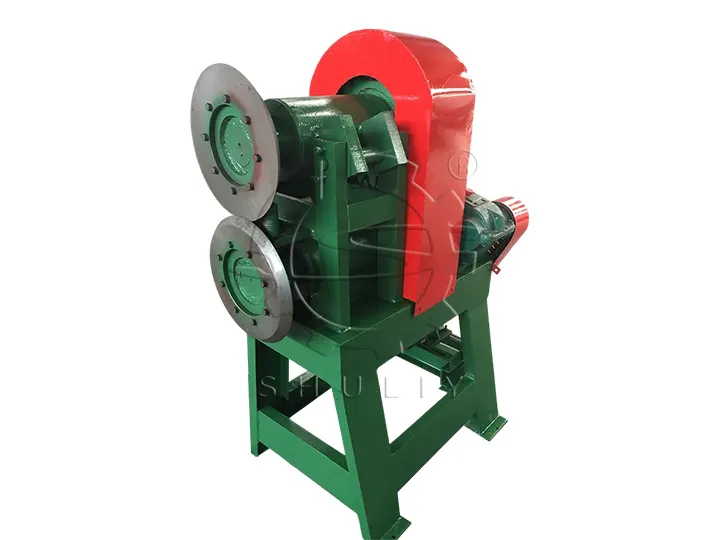
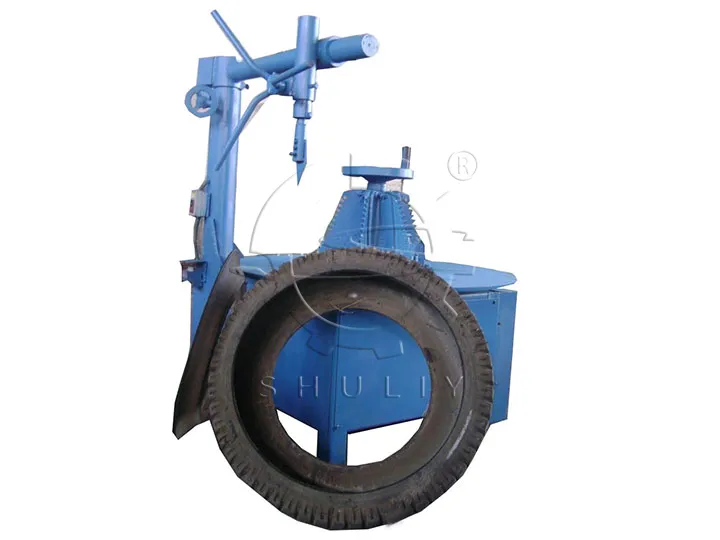
Waste tyres are fed into the pre-processing unit. Depending on your needs, a De-beader (Wire Drawing Machine) extracts the thick bead wire, or a Tire Ring Cutter separates the sidewalls, followed by a Steel Wire Separator. This step yields high-value, clean steel bead rings.
Step 2: Primary Shredding – Powerful Size Reduction
The pre-processed tyres are conveyed to the Tire Shredder. Its powerful dual-shaft blade system easily tears whole tires into uniform 50-100mm rubber blocks, preparing them for the fine grinding stage.
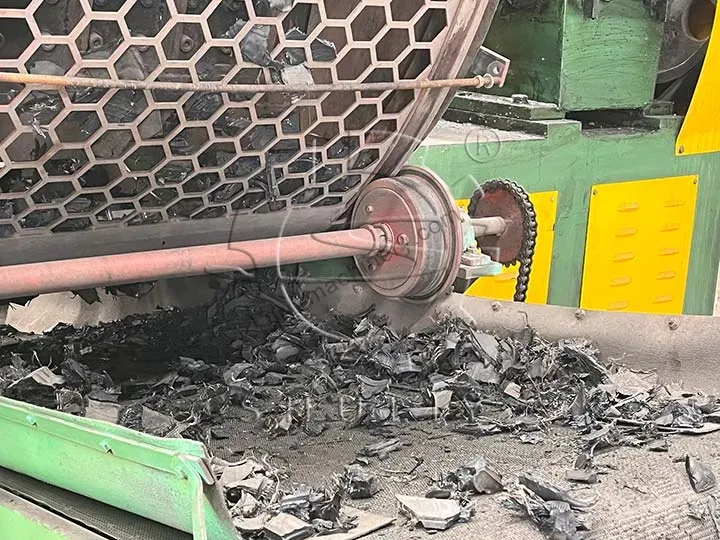
Step 3: Fine Grinding – Milling into Rubber Powder
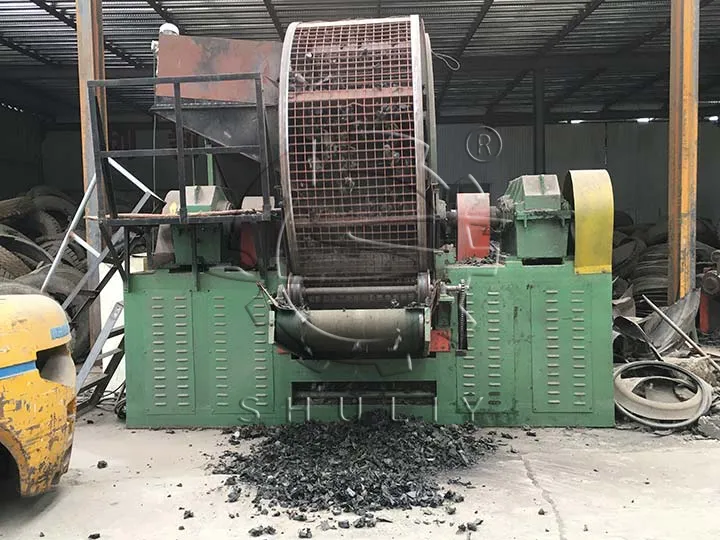
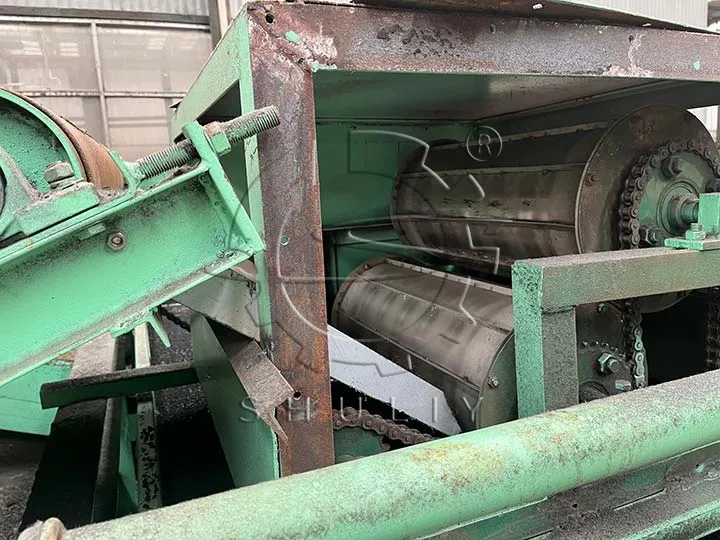
The rubber blocks enter the core part of the line: the Rubber Mill (also called scrap tire crushing machine). Through the intense pressure and shearing action of the alloy rollers, the rubber blocks are rapidly ground into fine 5-40 mesh rubber powder. The final mesh size is adjustable to meet your market demands.
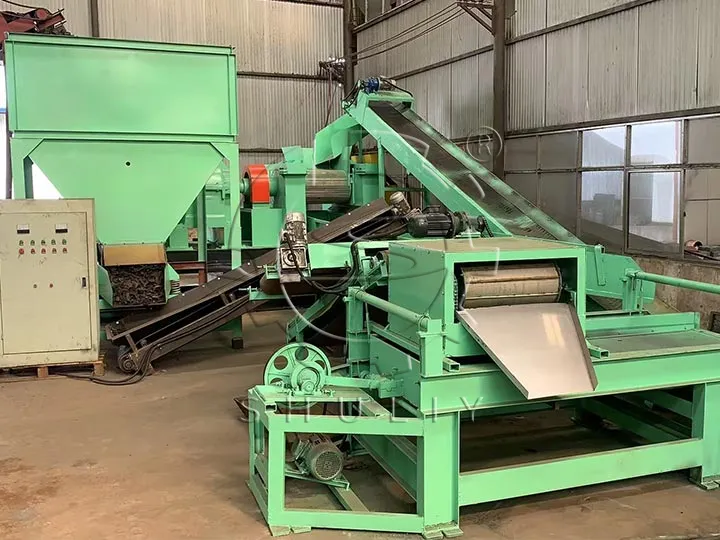
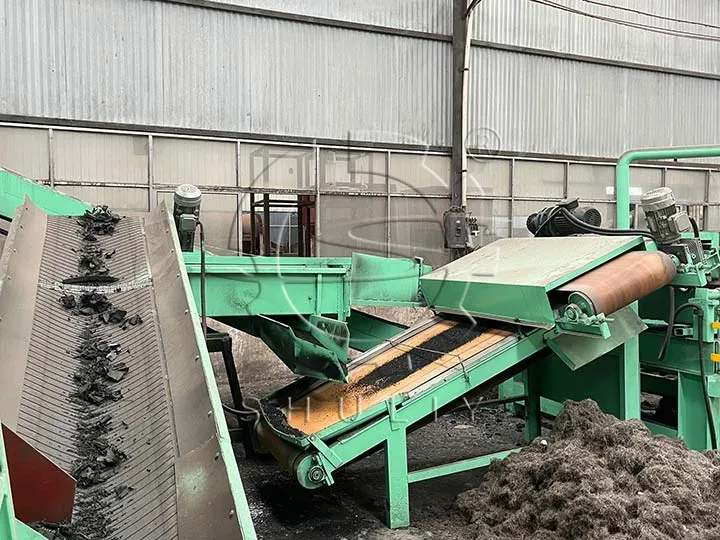
Step 4: Separation and Purification – Achieving Pure End Products
Throughout the tire rubber crushing process, integrated Magnetic Separators and Fiber (Nylon) Air Classifiers work to purify the material. The magnetic systems extract the fine steel wire, while the air classifiers remove nylon and other fibrous materials. The result is three clean, sellable end products: high-grade rubber powder, fine steel wire, and nylon fiber.
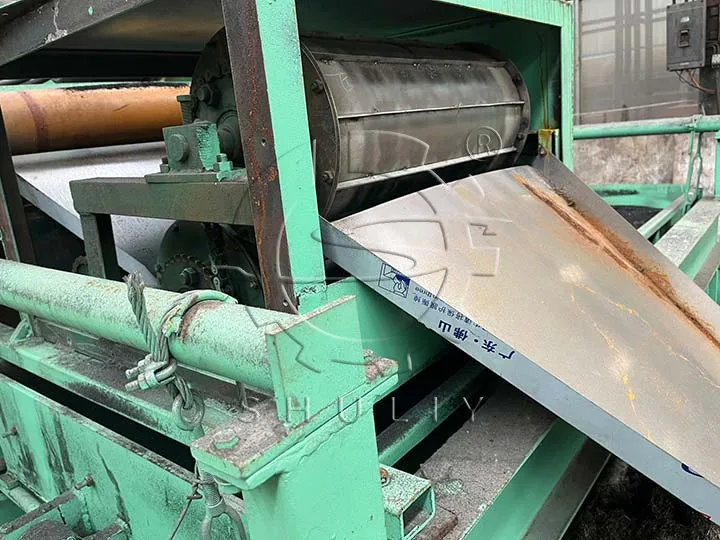
Final Rubber Powder/Granules and By-products
Our Core Technology & Components
Superior performance is born from a relentless focus on detail. We will examine the two most critical equipment in the rubber granules production line.
Rubber Mill: The Heart of the Line, The Source of Efficiency
The Rubber Mill (rubber crushing machine) dictates the final product quality and overall productivity. Our design surpasses traditional equipment in every key area:
- Core Rollers: Crafted from 5Cr6MnMo wear-resistant alloy with a dual-grooved design. Benefit: Exceptional durability (backed by a 3-year warranty) and higher output thanks to the 1:2.5 speed ratio, which creates superior shearing force.
- Bearing System: Our scrap tire crushing machine is equipped with 8 double-row long roller bearings. Benefit: This significantly reduces operational friction and heat, leading to energy savings of up to 33% and a longer machine lifespan.
- Reducer (Gearbox): Our scrap tire crusher utilizes a hyperbolic gear reducer with a dual-gear row design. Benefit: Delivers higher torque and load capacity while ensuring low-noise, reliable, and long-lasting performance.
Tire Shredder: Raw Power for Any Waste Tire
The tyre shredder is another key machine to the entire fully automatic tire recycling line, and its performance is critical. Ours is built for power and endurance:
- Shredder Blades: Made from a specially heat-treated composite alloy steel. Benefit: This provides the perfect balance of hardness and toughness, allowing the blades to tear through steel-belted tires for extended periods before requiring maintenance. Blade thickness reaches up to 100mm on larger models.
- Powerful Model Range: We offer a full range from the 900 model to the 1800 model. Benefit: With power ratings from 64.5 kW to a massive 328.5 kW and throughput from 2 to over 20 tons/hour, we have the right machine to match your operational scale and ambition.
A Smart Investment Engineered for Your Success
Investing in tire recycling means investing in a high-growth, sustainable industry. Our full automatic tire recycling line is your most reliable partner in this venture, engineered to deliver an excellent return on investment, low operational costs driven by core energy-saving technology, and long-term, reliable production backed by robust design.
It’s Time to Turn “Black Pollution” into Your “Black Gold”. Contact Shuliy technical experts today for a free, customized proposal and a detailed ROI analysis!
Frequently Asked Questions of Tire Recycling Line
You claim your equipment is 33% more energy-efficient. What specific technologies achieve this?
This efficiency advantage stems primarily from three core designs in our Rubber Mill:
- Bearing System: Shuliy Group uses 8 double-row long roller bearings instead of traditional plain bearings, which dramatically reduces energy loss from friction. 2) Drivetrain: We utilize a heavy-duty hyperbolic gear reducer, which offers superior transmission efficiency and load capacity. 3) Grinding Efficiency: The optimal 1:2.5 speed ratio of our rollers creates more shearing force, completing the grinding task more quickly and thus lowering the energy consumed per ton of output.
What are the main wear parts in the rubber powder/granule production line, and what are their service lives and replacement costs?
The primary wear parts are the shredder blades and the rubber mill rollers.
- Shredder Blades: Made from a high-hardness composite alloy, their lifespan is significantly longer than standard blades. Furthermore, they are designed as individual, replaceable inserts, so you don’t need to replace the entire expensive shaft.
- Rubber Mill Rollers: This is our core advantage. They are forged from 5Cr6MnMo wear-resistant alloy, making them extremely durable. We back this with a 3-year warranty. At the end of their long life, they can be repaired and restored through welding and polishing, eliminating the high cost of complete replacement required for traditional cast iron rollers.
How does the final rubber granlues’ mesh size specifically affect the production output?
This is a critical operational factor. The mesh size and hourly output have an inverse relationship: the finer the powder, the longer the grinding time, and the lower the hourly output. For example, our SL-560 model can produce 900-1000 kg/hr of 10-mesh coarse granules, but when producing fine 40-mesh powder, the output is 300-350 kg/hr. We will help you select the optimal model based on your primary product requirements.
Our primary feedstock is large OTR (Off-The-Road) tires. Can your fully automatic tire recycling line handle them, and what special configurations are required?
Yes, absolutely. As experienced tire recycling machine manufacturers, we have proven solutions for OTR tires. Compared to a standard line, an OTR line requires these key upgrades:
- Pre-Processing: It needs specialized, heavy-duty OTR De-beaders and OTR Tire Cutters.
- Shredder: A larger model (1200 or above) is essential, featuring a wider feeding chamber, thicker blades, and more powerful motors.
- Rubber Mill: A higher-capacity model, such as the XKP450 or larger, is typically configured to match the high throughput of the front-end equipment.
From signing the contract to full operation at our tire recycling facility, what is the typical lead time?
The total lead time includes manufacturing, shipping, and on-site work. 1) Manufacturing: A standard line typically takes 45-60 days to produce. 2) Shipping: This depends on your geographic location. 3) On-site Work: Once the equipment arrives, our engineers will be on-site for installation, commissioning, and training, which usually takes 1-2 weeks. Therefore, you can generally expect a total lead time of approximately 2-3 months from order confirmation to production start.
What is included in your quotation? Are your tire recycling facility installation and training costs covered?
Shuliy group’s goal is to provide a transparent, “turnkey” quotation. A standard proposal includes:
- All tire recycling facility: Every single machine from pre-processing to final product collection.
- Ancillary Systems: All necessary conveyors, ducting, and framework.
- Electrical Control System: A centralized PLC control cabinet.
- On-site Service: The cost for our engineers to supervise installation, commission the entire line, and provide comprehensive training for your operators. Freight and engineer travel expenses are typically itemized separately or as per the contract terms.
We’ve also seen cryogenic recycling methods. What are the pros and cons compared to your ambient temperature process?
That’s an excellent technical question. The key differences are:
Investment Cost: Our ambient process has a far lower initial investment as it does not require expensive liquid nitrogen storage and injection systems.
Operating Cost: This is the biggest difference. Our system consumes only electricity, whereas the cryogenic process requires a continuous and expensive supply of liquid nitrogen, making its operating costs extremely high.
Final Product: While cryogenic methods can produce very fine powder (80-200 mesh), the 5-40 mesh powder from our ambient rubber powder production line is perfectly suitable and far more cost-effective for the vast majority of applications (e.g., modified asphalt, rubber flooring, waterproof materials). In summary, our ambient physical method is the mainstream, most cost-effective and widely applicable technology on the market today.